
Upper GI
Cholangiocarcinoma
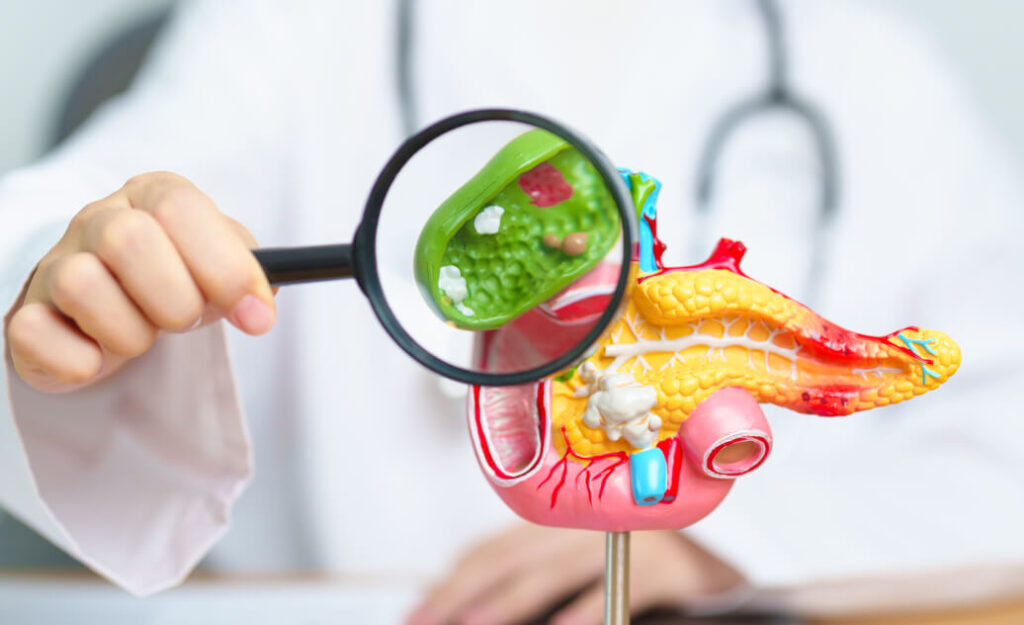
Cholangiocarcinoma (Bile Duct Cancer)
Cholangiocarcinoma is a rare and aggressive form of cancer that originates in the bile ducts, which are responsible for carrying bile from the liver to the gallbladder and small intestine. The disease is classified based on the location of the tumour within the biliary tree:
- Intrahepatic cholangiocarcinoma: Arises within the liver.
- Perihilar cholangiocarcinoma (Klatskin tumour): Occurs at the junction of the right and left bile ducts, near the liver hilum.
- Distal cholangiocarcinoma: Found in the bile ducts closer to the small intestine.
Risk Factors
Several factors increase the risk of developing cholangiocarcinoma, including:
- Chronic liver diseases: Such as cirrhosis, hepatitis B or C, primary sclerosing cholangitis (PSC), and chronic biliary inflammation.
- Gallstones or gallbladder disease.
- Congenital bile duct abnormalities: Such as choledochal cysts.
- Toxins: Exposure to certain chemicals like aromatic amines (found in some industrial settings) or liver fluke infections (common in parts of Asia).
- Age and gender: It typically affects older adults, and men are more likely to develop it than women.
- Genetic mutations: Mutations in genes like IDH1/IDH2, KRAS, TP53, and others have been associated with the disease.
Symptoms
The symptoms of cholangiocarcinoma are often nonspecific and can vary based on the tumour’s location:
- Jaundice (yellowing of the skin and eyes) due to bile duct obstruction.
- Abdominal pain or discomfort, typically in the upper right quadrant.
- Weight loss and anorexia (loss of appetite).
- Itchy skin (pruritus) due to bile salt buildup.
- Dark urine and pale stools.
- Fever and chills (if the tumour causes infection or cholangitis).
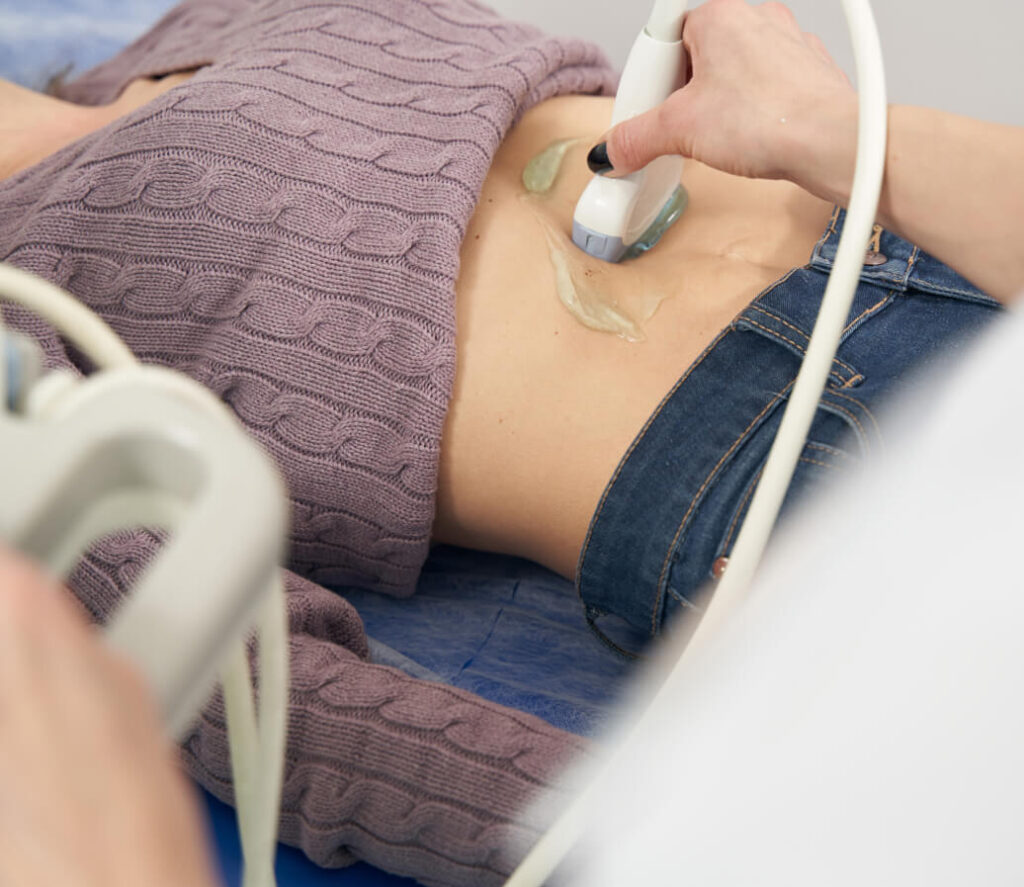
Diagnosis
- Imaging tests: Ultrasound, CT scans, MRI, and MRCP (Magnetic Resonance Cholangiopancreatography) help locate the tumour and assess its size and spread.
- Endoscopic procedures: ERCP (Endoscopic Retrograde Cholangiopancreatography) or PTC (Percutaneous Transhepatic Cholangiography) may be used to visualize the bile ducts directly and collect biopsy samples.
- Biopsy: Histological examination of tumour tissue is required for a definitive diagnosis.
Staging
Cholangiocarcinoma staging is based on the extent of tumour spread and is categorized by:
- T (Tumour): Describes the size and local extent of the primary tumour.
- N (Nodes): Refers to whether regional lymph nodes are involved.
- M (Metastasis): Indicates whether the cancer has spread to distant organs.
The staging system often used is the AJCC (American Joint Committee on Cancer)
TNM system.
Treatment Options
Treatment options depend on the tumour’s location, size, and stage, as well as the patient’s overall health. The primary treatment approaches include:
Surgery
- The most effective treatment if the tumour is resectable. Surgical options may include:
- Liver resection: For intrahepatic cholangiocarcinoma.
- Bile duct resection: For perihilar or distal cholangiocarcinoma.
- Liver transplant: In cases of advanced disease where the tumour cannot be fully resected.
Chemotherapy
- Often used for advanced or unresectable cholangiocarcinoma. Common chemotherapy regimens include:
- Gemcitabine and cisplatin: The standard first-line chemotherapy for advanced cholangiocarcinoma.
- Other regimens or targeted therapies may be used based on molecular testing of the tumour.
Radiation therapy
- Can be used as an adjunct to surgery or in palliative care for advanced disease. It may help shrink the tumour or alleviate symptoms.
Targeted therapy and immunotherapy
- Some patients may benefit from newer treatments, such as targeted drugs that inhibit specific mutations (e.g., IDH1 inhibitors) or immune checkpoint inhibitors (e.g., pembrolizumab) in certain cases.
Palliative care
- For patients with advanced, unresectable disease, treatments to manage symptoms (e.g., biliary drainage) are important.
Trusted for care
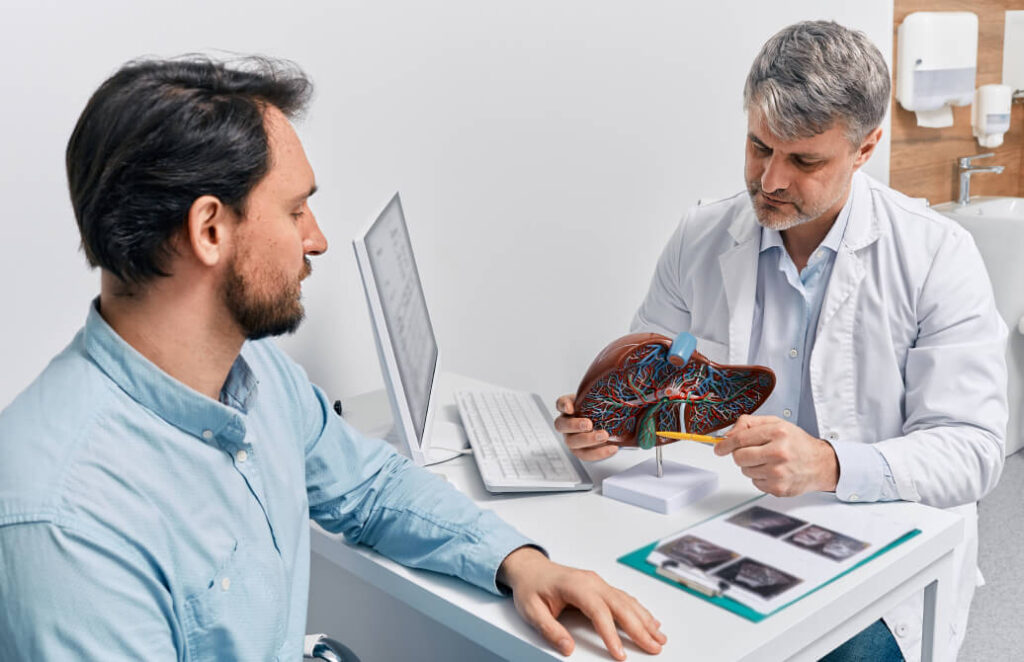
Dr Wang and his team are respected and trusted for the care provided to their patients
Prognosis
The prognosis for cholangiocarcinoma is generally poor due to its aggressive nature and late presentation. The five-year survival rate varies by stage and whether the cancer can be surgically resected. Early detection is key for improving outcomes, but most cases are diagnosed at an advanced stage. Factors affecting prognosis include:
- Tumour resectability.
- Presence of distant metastasis.
- Response to treatment.
Follow-up and Monitoring
After treatment, patients are typically monitored with imaging studies (CT, MRI) and blood tests (e.g., liver function tests, CA 19-9) to detect recurrence or complications.
Given the complexity of cholangiocarcinoma, a multidisciplinary approach involving hepatobiliary surgeons, oncologists, radiologists, and pathologists is crucial in determining the best course of treatment for each individual patient.

Other Upper GI Conditions
Pancreatic cancer begins in the tissues of the pancreas, an organ located behind the stomach…

Also known as stomach cancer, is a disease in which malignant (cancer) cells form in the lining…

Also known as stomach cancer, is a disease in which malignant (cancer) cells form in the lining…