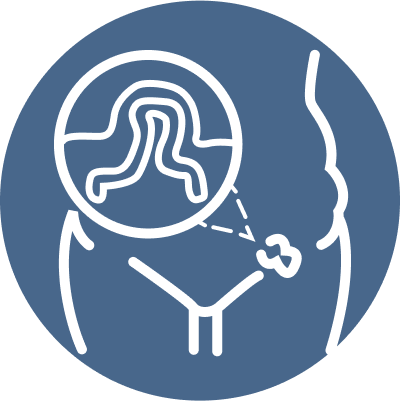
An umbilical hernia occurs when part of the intestine or fatty tissue pushes through an opening in the abdominal muscles near the belly button (umbilicus). This type of hernia is common in infants but can also affect adults.
Causes and Risk Factors
Infants
Congenital Weakness: The abdominal wall muscles don’t close completely around the umbilical cord.
Prematurity: More common in premature babies.
Adults
Increased Abdominal Pressure: Due to obesity, multiple pregnancies, or heavy lifting.
Chronic Coughing or Constipation: Conditions that increase pressure on the abdominal wall.
Previous Surgery: Surgical sites can weaken over time.
Diagnosis
Physical Examination
A doctor will check for a bulge in the abdominal area.
Imaging Tests
Ultrasound or CT scan may be used to assess the hernia and its contents.
Symptoms
Bulge or Lump: A noticeable bulge near the belly button, especially when crying, coughing, or straining.
Pain or Discomfort: Particularly when lifting, coughing, or bending over.
Swelling: Around the umbilicus.
Tenderness: The area may be tender to the touch.
Nausea and Vomiting: Indicating a possible complication such as strangulation.
Treatment Options
Lifestyle Changes
Maintaining a healthy weight and avoiding heavy lifting.
Surgical Repair
Recommended if the hernia is painful, large, or causes complications.
Open Surgery: An incision is made near the hernia, and the protruding tissue is pushed back into the abdomen. The abdominal wall is then repaired with sutures and possibly reinforced with synthetic mesh.
Laparoscopic Surgery: Minimally invasive approach using small incisions and a camera to guide the repair.
Trusted for care
Dr Wang and his team are respected and trusted for the care provided to their patients